
Work group I · 19 works
Body and Resonance
Movement, gesture and color as visible energy
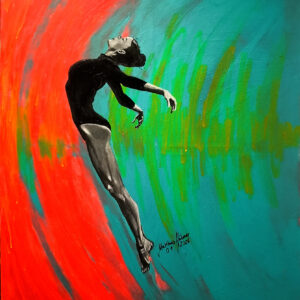
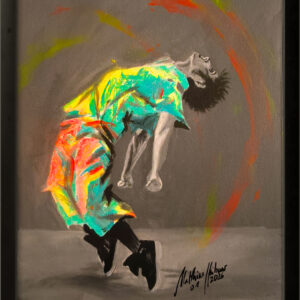
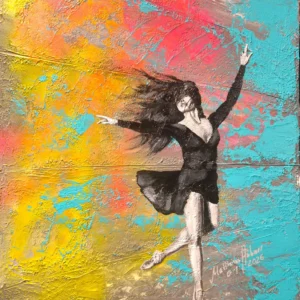
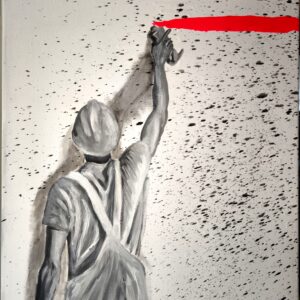
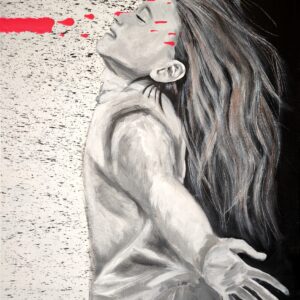
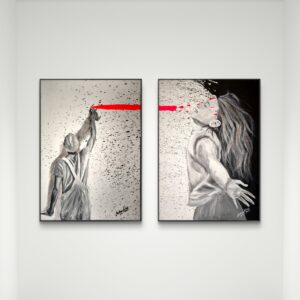
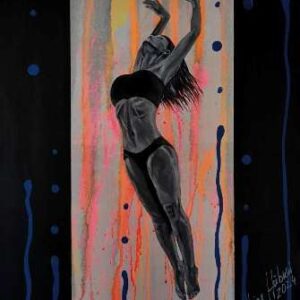
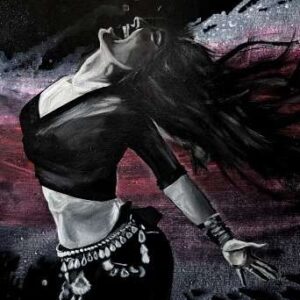
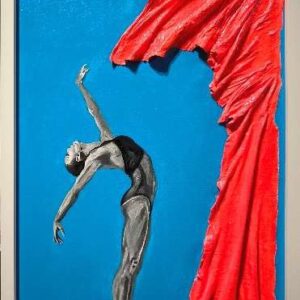
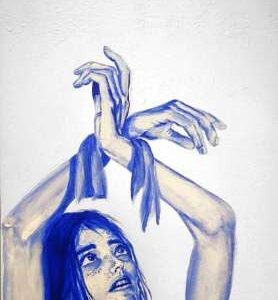
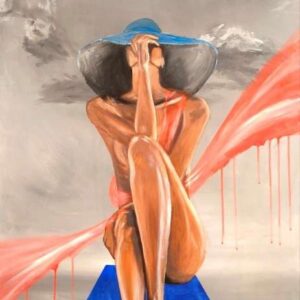
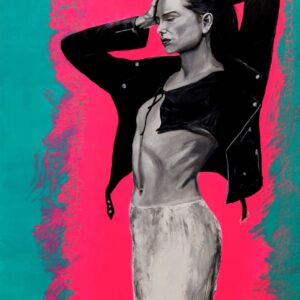
In this group of works, the body becomes an instrument. Matthias Hübner does not paint sequences of movement but the force that sets a movement off: the moment a figure steps beyond its familiar order. The backbend in “Tanz,” the open arms in “Ton,” the hand about to strike in “Farbstrich Anfang”: it is always the gesture that organizes the pictorial space.
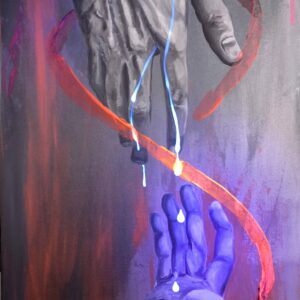
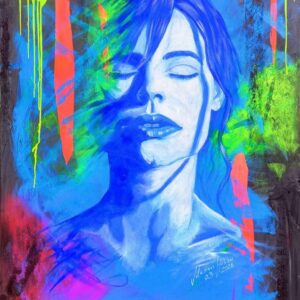
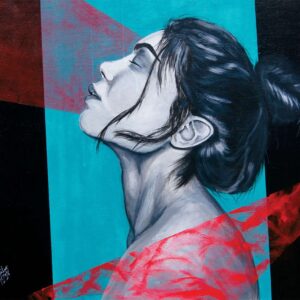
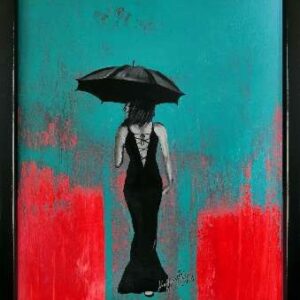
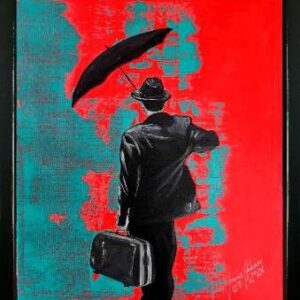
Here, color functions as frequency. Turquoise, pink and orange break out of the gray figuration and make visible what the body sends out.
Curatorial Perspective
I
Description
Figures in backbends, leaps and sweeping movements: in “Ton” the arms open, in “Tanz” the body tips backward, in “Farbstrich Anfang” a hand prepares the first stroke. Hübner paints the bodies in gray and black and white and lets neon color break through where the movement reaches its greatest tension.
II
Idea
The group shows energy, not sequences. Each work captures the moment in which a figure goes beyond its usual posture. Color is not decoration here but frequency: it makes visible what the body sends out.
III
Context
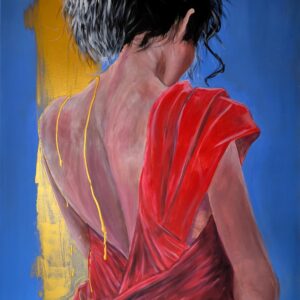
Hübner’s modern surrealistic realism combines precise, almost photorealistic figuration with expressive interventions of color. A closeness to dance and stage photography is palpable but broken through painting: color releases the figure from the likeness and leads it into a pictorial space of its own.
IV
What sets it apart
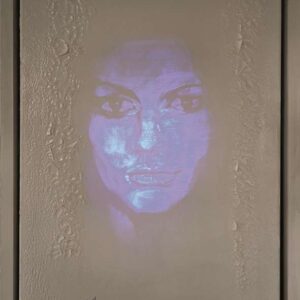
Almost all works are UV-reactive and reveal a second pictorial layer under black light. “Farbstrich Anfang” and “Farbstrich Ende” (each 70 × 50 cm) form a pair and are also available together as a series. “Göttin” sets its own accent with gold.
V
For collectors & spaces
For collectors, these works are an especially immediate side of Hübner’s position: physical, present and with a clear impact from a distance. They unfold their particular effect in generous spaces, and many works also show a second appearance under UV light.