We often recognize an animal in a picture at once. Before we notice how it is painted, we have already grasped its shape: a lion, a zebra, a duck. With recognition comes expectation. We connect qualities, memories, and images with what we see.
Then the painting begins.
A color breaks away from its natural model. A gaze appears unusually close. A contour is simplified so far that a few lines are enough. The familiar animal becomes a pictorial figure with a presence of its own.
At Favori Art, this transformation can be followed across different artistic positions. Erich Graf, Rike Wölke, and Ali Görmez all work with animal motifs, yet each develops a different kind of encounter from them.
Recognition Is Only the Beginning
Depictions of animals carry a cultural memory. The lion can embody strength, the bird freedom, the duck an almost casual familiarity. Such associations are available long before we look at a particular work.
For the individual painting, they are rarely enough.
A lion can appear sovereign, tense, vulnerable, or remote. What effect emerges is decided in the concrete depiction: in the relationship between head and picture plane, in the direction of the eyes, in the transition between body and background.
Our own experience plays a part as well. Someone who connects an animal with particular memories sees something different from someone who first attends to form and color.
A close look therefore begins with what is visible. How does the figure stand in the picture? Where is its attention directed? Which areas are worked out, and which remain open?
An interpretation can grow from these observations.
Erich Graf: The Gaze as Encounter
In Erich Graf’s “Lion modern” (2024, acrylic on canvas, 90 × 120 cm), the frontal depiction gives the lion a particular immediacy. The head turns toward the viewer. This creates a situation reminiscent of a portrait: we see an animal and, at the same time, meet a gaze.
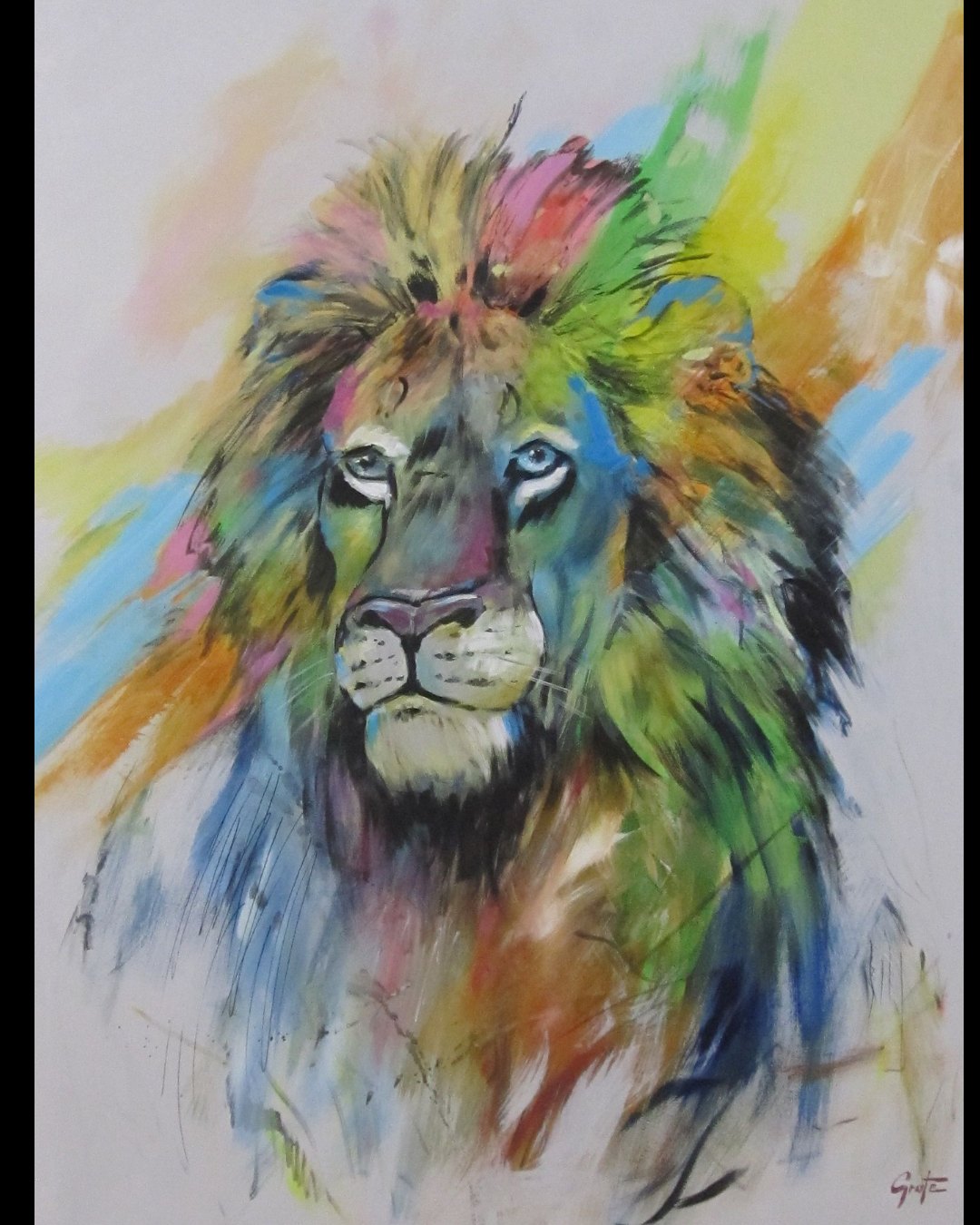
This closeness can be observed without attributing a clear human emotional state to the animal. What we feel as calm, alertness, or self-assurance arises from the interplay of motif and painterly handling.
The use of color shapes how we read the familiar figure: mane and fur break away from the natural model in green, blue, pink, and yellow, while the face and eyes remain clearly drawn. It directs attention to individual areas and shows that an artistic decision is at work here. The lion has a physical appearance and, at the same time, an order of planes, transitions, and contrasts.
It is worth shifting between these ways of seeing. From a distance, the figure emerges as a whole. Up close, the means that create its presence become visible.
The painting holds both together.
Rike Wölke: Pattern, Body, and Painterly Freedom
A zebra already brings a striking visual structure with it. Its coat makes the body appear as a web of lines and contrasts. In painting, this becomes a particular task: how do these lines relate to the shape of the animal and to the picture plane as a whole?
Rike Wölke’s “Zebra 1” (2025) and “Zebra 2” (2024), both acrylic on stretcher frame, 60 × 100 cm, offer an entry point for exactly this kind of looking. Black brushstrokes carry the stripe pattern beyond the body and into the picture plane. In between lie neon traces in pink and orange: tire tracks that can be read as signs of human intervention in the natural world.
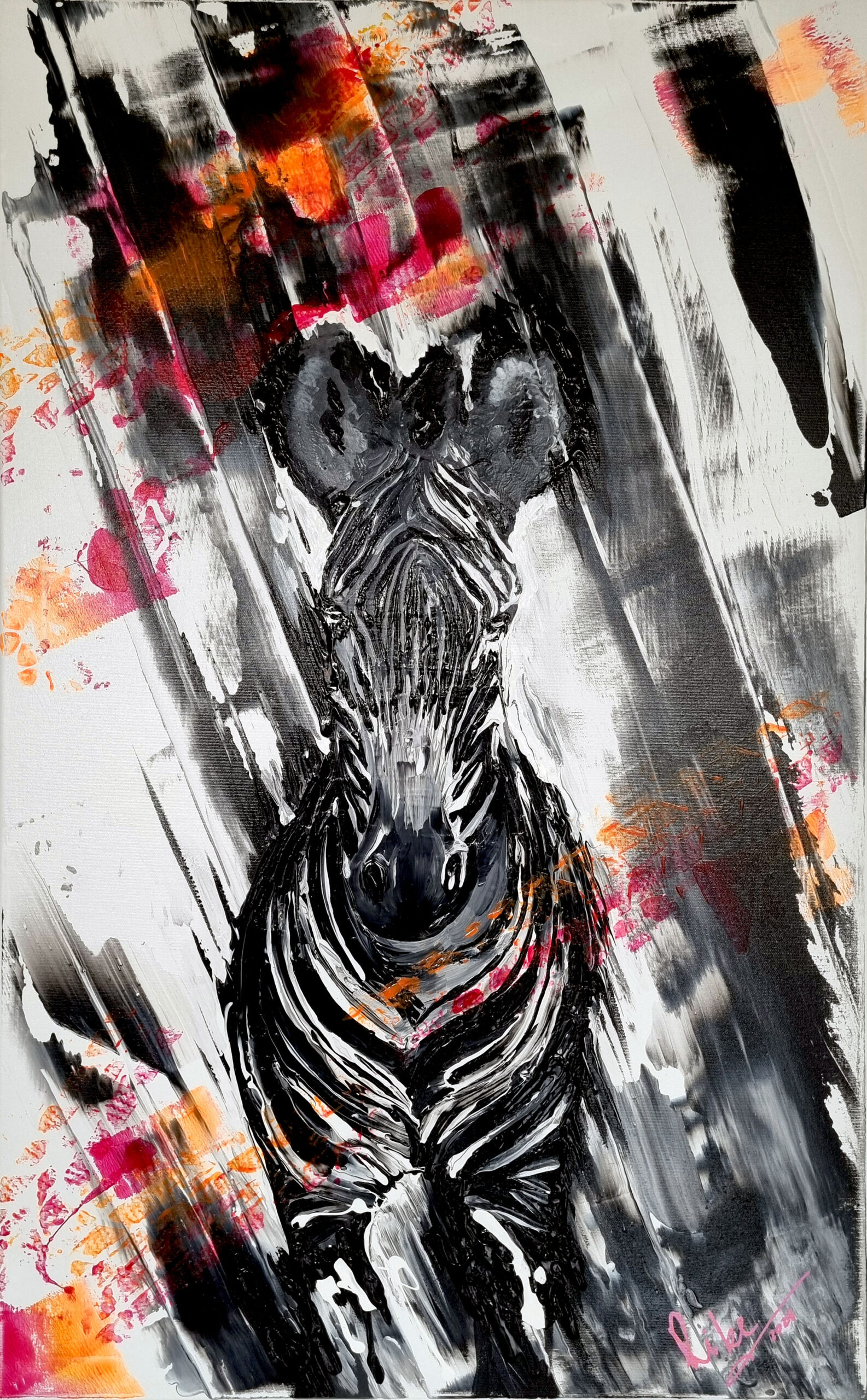
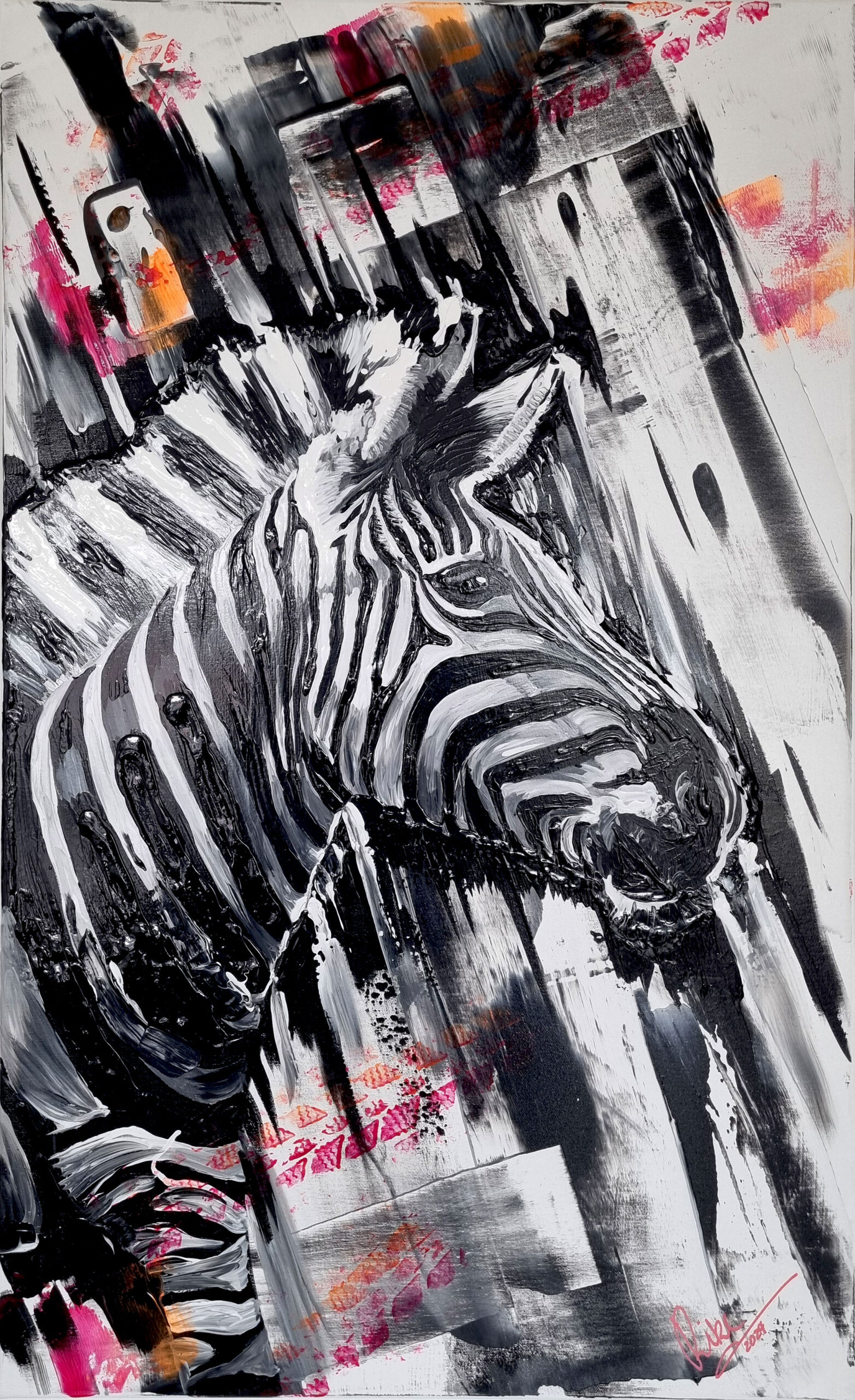
Here our attention shifts. What was just read as fur appears as rhythm. A line describes the body and, at the same time, leads through the composition. The depiction of the animal opens up into painterly surface.
At the same time, the neon traces intrude into the picture. The animal appears powerful and present, and the tire tracks bring the relationship between wilderness and human intervention into play.
This is a quality of familiar motifs: they offer orientation and still leave room for deviation. Because we recognize a zebra, we can perceive more precisely how the artist handles its appearance.
The question shifts from recognizing to seeing.
Ali Görmez: A Figure Becomes Familiar
In Ali Görmez’s work, we meet Focky, a distinctly reduced animal figure. The duck is quickly recognizable. Its simplified form creates immediate accessibility and, at the same time, forms the basis for different versions.
The Focky works belong to the November 2025 Edition. Each figure is a unique piece, painted in acrylic on natural-colored painting board (20 × 20 cm), and exists only once. They can be acquired individually or together.
Anyone who looks at several Focky works side by side can follow how a recurring form changes through color and design: the beak appears in orange, yellow, or pink, the wings in green, light blue, or white. The figure remains familiar; each appearance sets different accents.
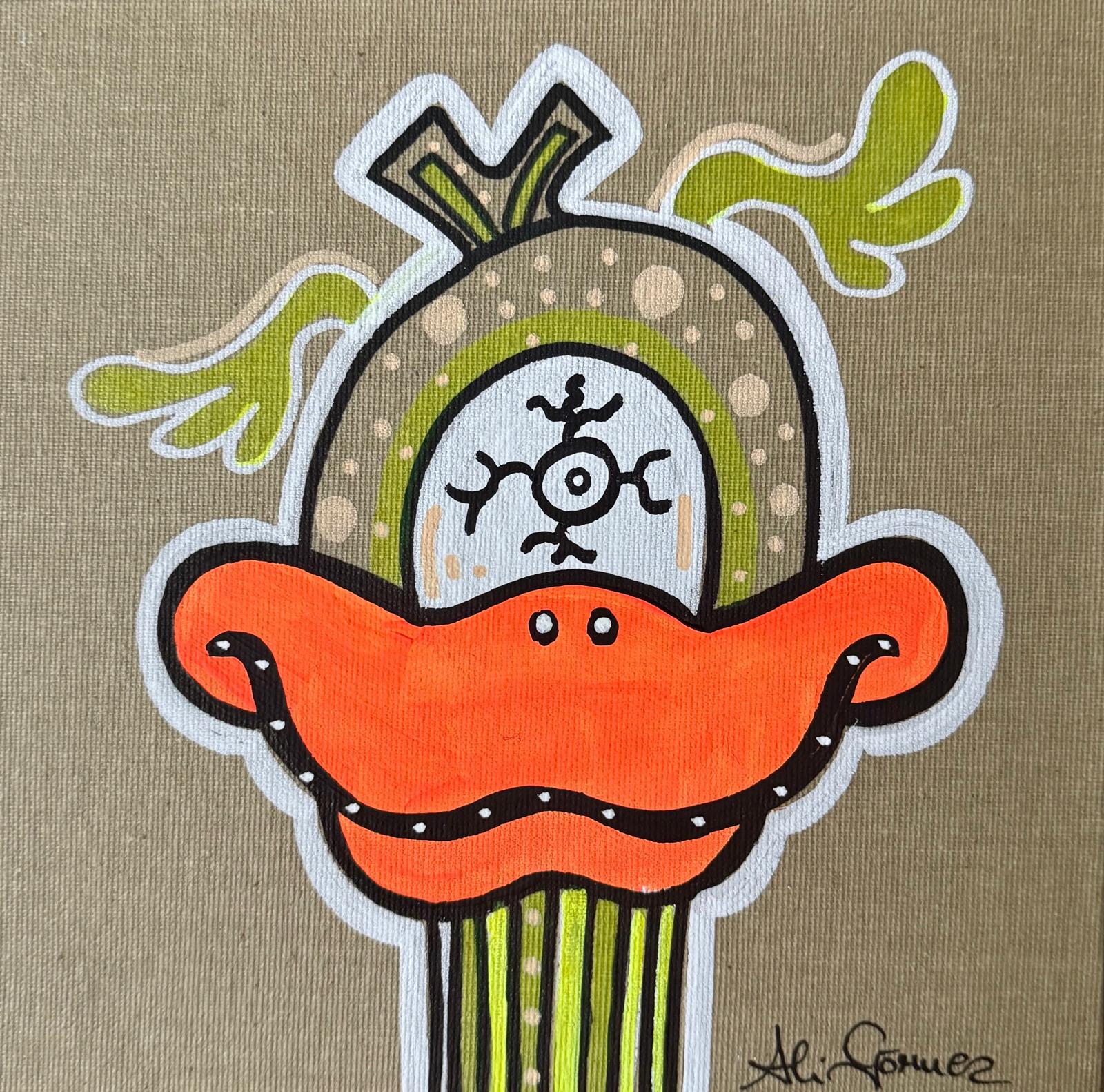
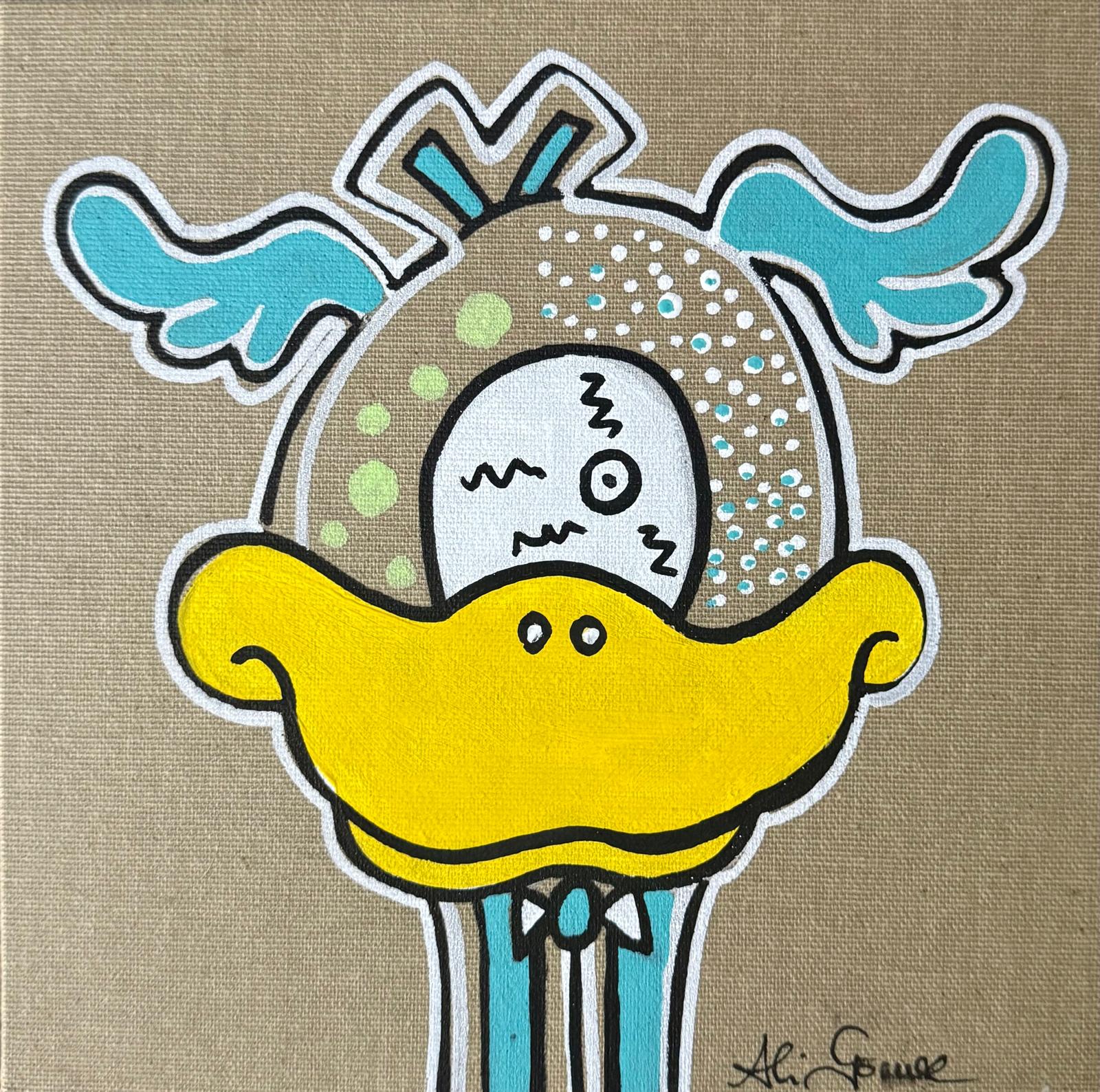
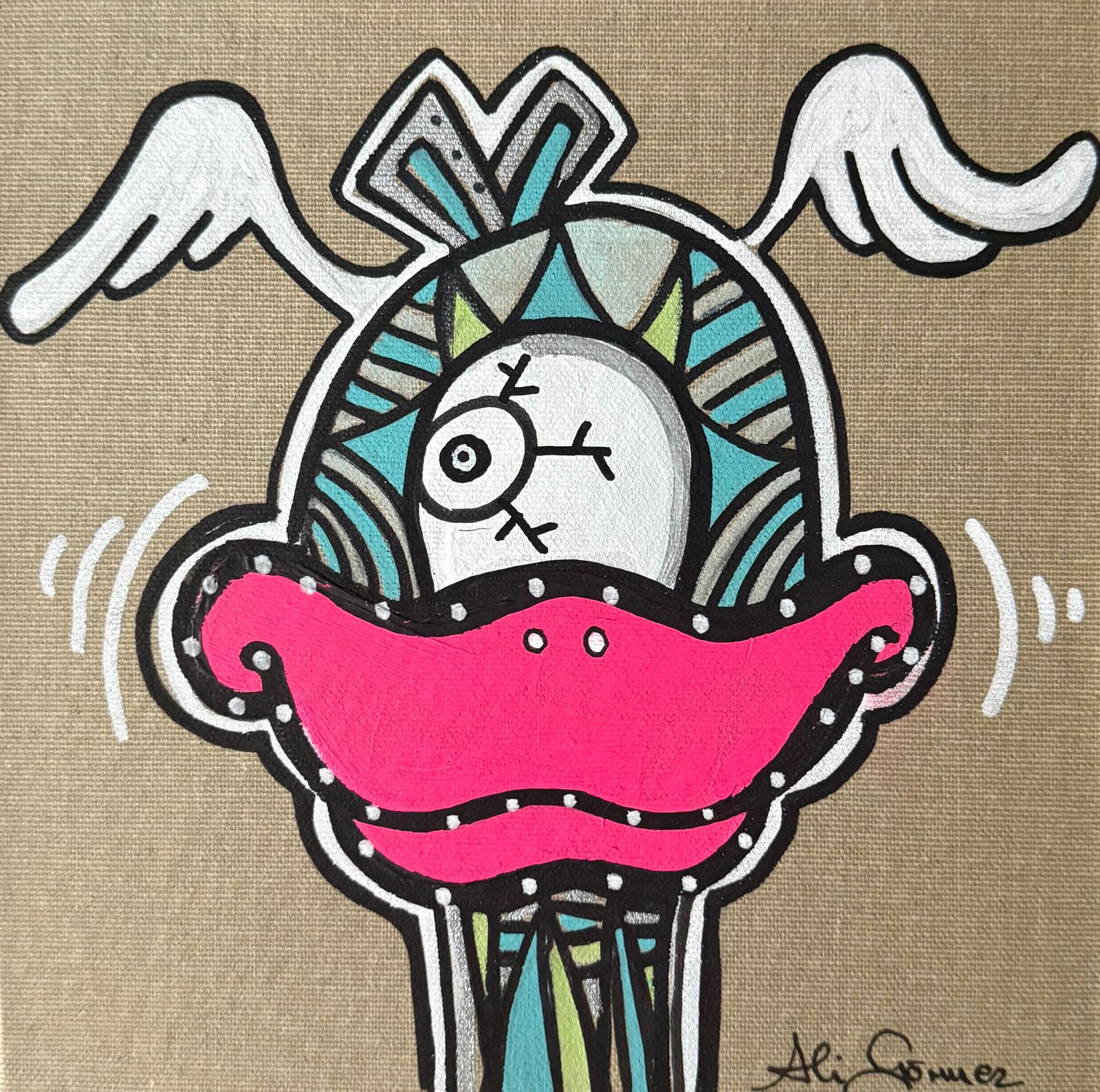
This repetition creates a particular relationship. With each further encounter, we recognize the visual language more easily and notice differences more precisely. A small change can gain weight precisely because the basic form is already known.
Focky thus combines the familiarity of an everyday animal with the autonomy of an artistic figure. The work can be grasped immediately and invites us to linger over its concrete design.
What We See in the Animal
Animals in pictures can trigger feelings that can only partly be explained by the depiction. We experience a gaze as questioning, a stance as proud, a figure as cheerful.
These perceptions are part of encountering art. They also say something about our own experiences and expectations.
It helps to connect the personal reaction with an observation: Which line makes the stance seem tense? Which crop creates closeness? How does color influence the mood?
This makes the feeling more precise. It gains a connection to the work without fixing its meaning.
Even seemingly simple animal motifs can open several layers in this way. Their accessibility makes the beginning possible. The artistic design determines what can be discovered beyond it.
Three Positions, Different Relationships
With Erich Graf, the frontal gaze can shape the encounter. Rike Wölke’s zebra draws attention to the interplay of animal form, painterly structure, and the traces of human intervention. With Focky, Ali Görmez develops a recurring figure whose familiarity grows through variation.
These differences make a comparison rewarding. The shared field of motifs connects the works; their respective visual language gives each its independence.
Anyone interested in depictions of animals can therefore begin with a personal preference and then widen the view. From the depicted creature to the composition. From the first association to the visible decision. From the familiar motif to a work that raises further questions on a second look.
Discover the works of Erich Graf, Rike Wölke, and Ali Görmez in the Favori Art gallery. We are happy to offer further insights into individual works and the artistic positions behind them.