You stand in front of a picture. A color draws your attention, a figure seems familiar, a surface is hard to place in space. Something holds your gaze. Then comes the question: What does it mean?
With it, the way we look changes. We search for a key, read the title, look at the description of the work, and check whether what we see adds up to a statement.
Sometimes it does. Sometimes something remains unresolved: the picture can be described, yet its effect does not end in the description.
At this point, a particularly attentive encounter can begin.
The Wish to Understand Correctly
Many people bring to art a standard they know from other areas: a question should have an answer. Anyone who looks closely enough should eventually see what is meant.
This expectation can create pressure, especially when others seem to speak effortlessly about composition, symbolism, or art-historical references. One’s own perception then feels inadequate. You felt something, but you do not yet have a confident language for it.
Yet hesitation is part of looking. A work can open up several contexts that complement each other or stand in tension. Something may remain that reveals itself only later.
First, See What Is There
A helpful beginning lies in description. Before we search for a meaning, we can follow how the picture is built: Where is the brightest spot? Which forms repeat? Where does the eye come to rest?
In this way, a general feeling becomes a more precise observation. A picture may seem restless, and on closer looking we notice that lines lead in different directions or strong contrasts meet closely. Another work feels expansive because a horizon line is set low or areas of color can hardly be delimited.
The meaning is still open. But we can better trace what creates our impression.
Sadik Uslu: Between Landscape and Color Space
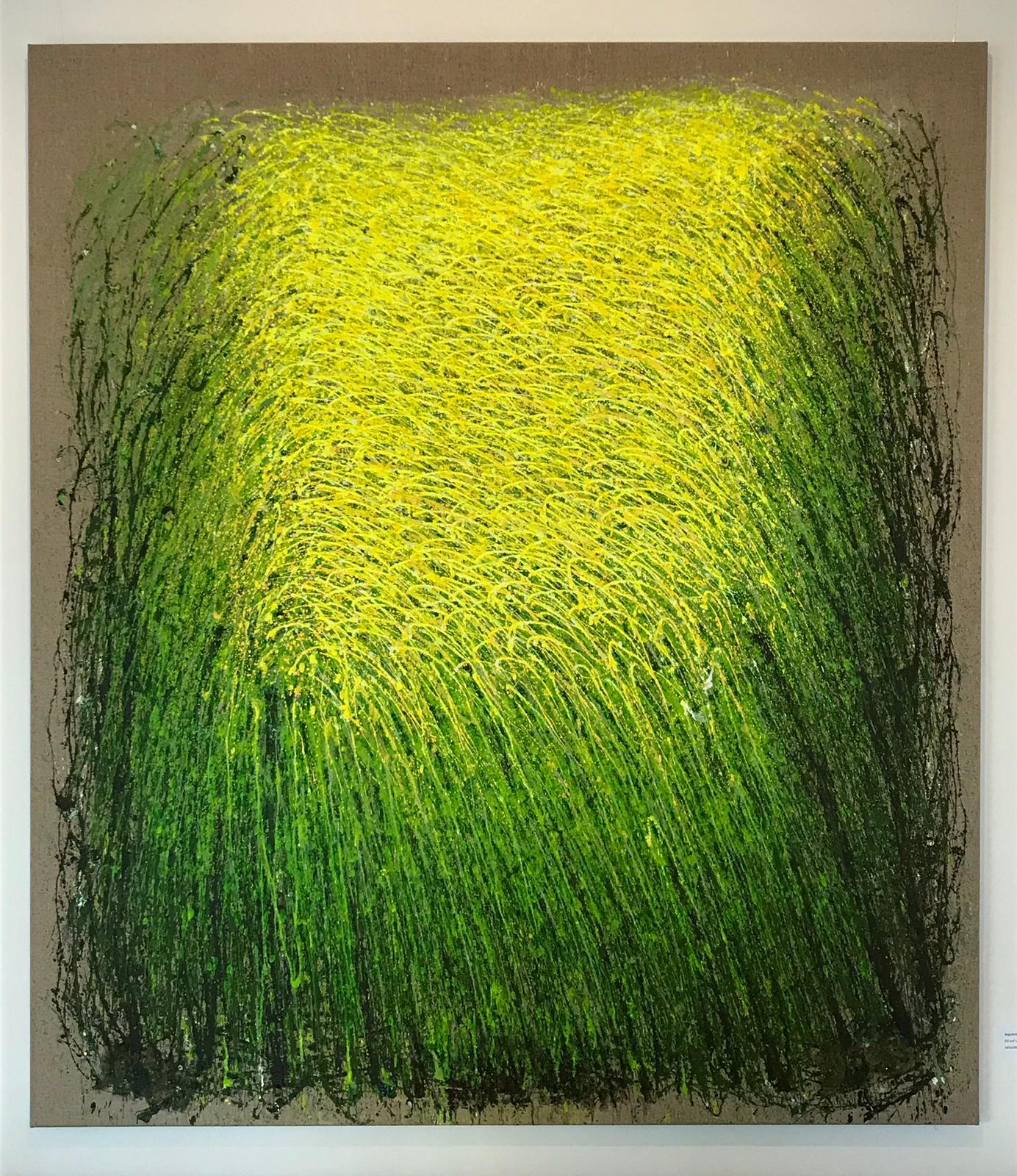
With Sadik Uslu, the shift between recognition and open perception is easy to follow. In “Rapsfeld” (2023, acrylic and oil on raw canvas, material inclusions of sand and earth, 145 × 160 cm), a luminous yellow and green condenses into a vibrating rectangle. Countless curved strokes sweep across the surface like stalks in the wind, darker at the edges, glowing at the center. The raw canvas remains visible.
From a distance, a spatial impression arises, almost a landscape. Up close, earth, sand, and the texture of the paint become more important. What first appeared as a field can now also be seen as a structure of material traces. Both perceptions can exist side by side.
The title gives a direction here. It connects what we see with a familiar experience of landscape. Yet it does not explain every color decision or every unevenness of the surface.
How strongly a title guides us becomes clear in a related work. “Untitled” (2024, acrylic and oil on raw canvas, material inclusions of sand and earth, 145 × 155 cm) builds on a similar gesture: a glowing red-orange framed by dark, densely drawn edges. Without a title, the picture suggests no landscape. We can see embers, a window, or simply a field of color.
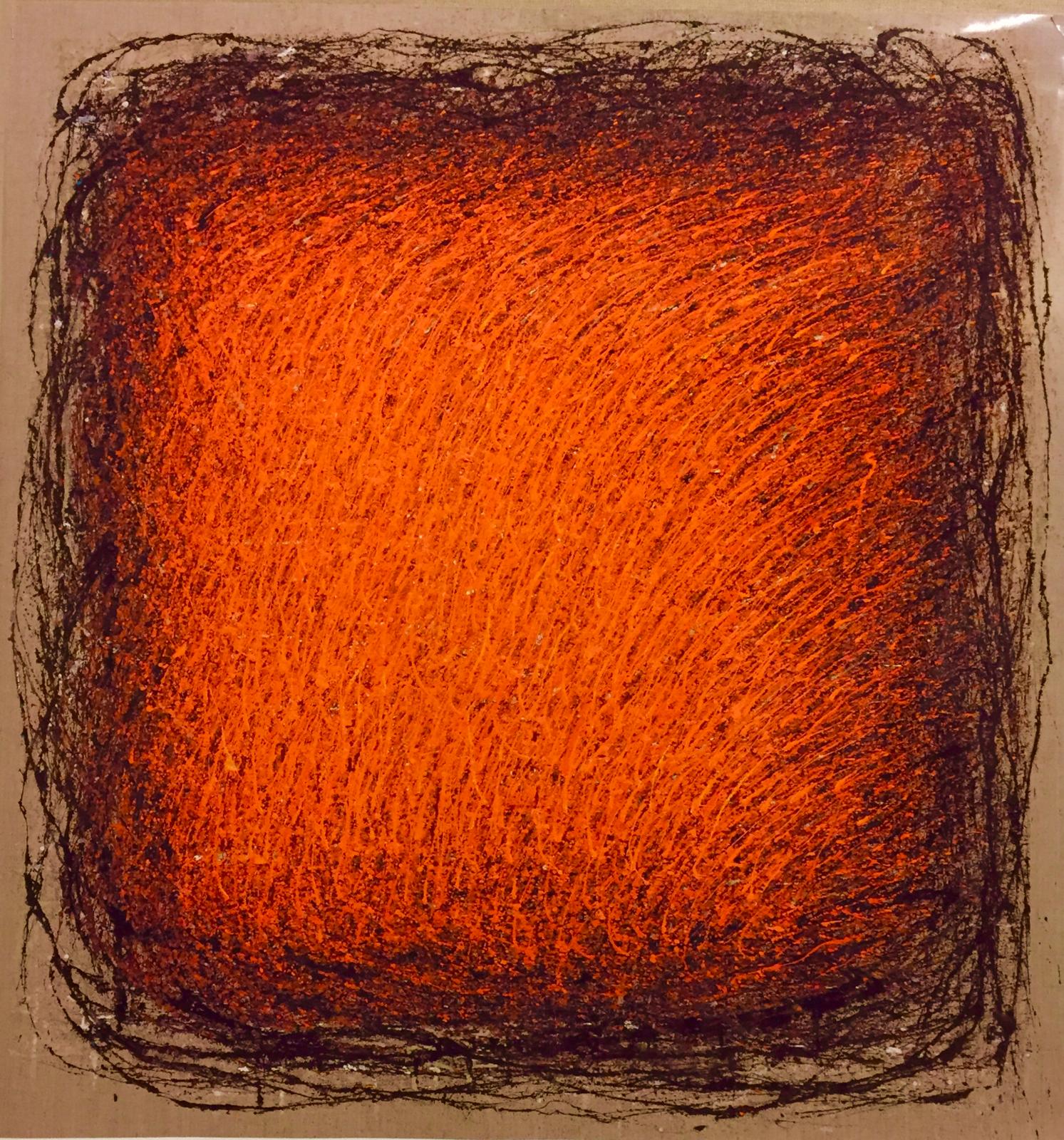
Anyone standing in front of these works can move between these levels: recognize a motif, notice the material, allow a memory, and return to the visible surface.
What Our Own Experience Adds
We always encounter a picture in a particular situation. We bring memories, moods, and habits of seeing. They influence which details we notice and which connections arise.
A field of color recalls a place that someone else has never seen. A certain light feels familiar, although the reason is hard to name. These associations belong to our own experience of the work. They are allowed to stand, even if they are not documented as the artist’s intention.
Linguistic precision helps: “This reminds me of …” opens a different level than “This depicts …”. The first sentence describes a relationship; the second makes a statement about the picture. This distinction creates freedom: it allows a personal reading and leaves room for other perceptions.
Rike Wölke: When a Title Gives Direction
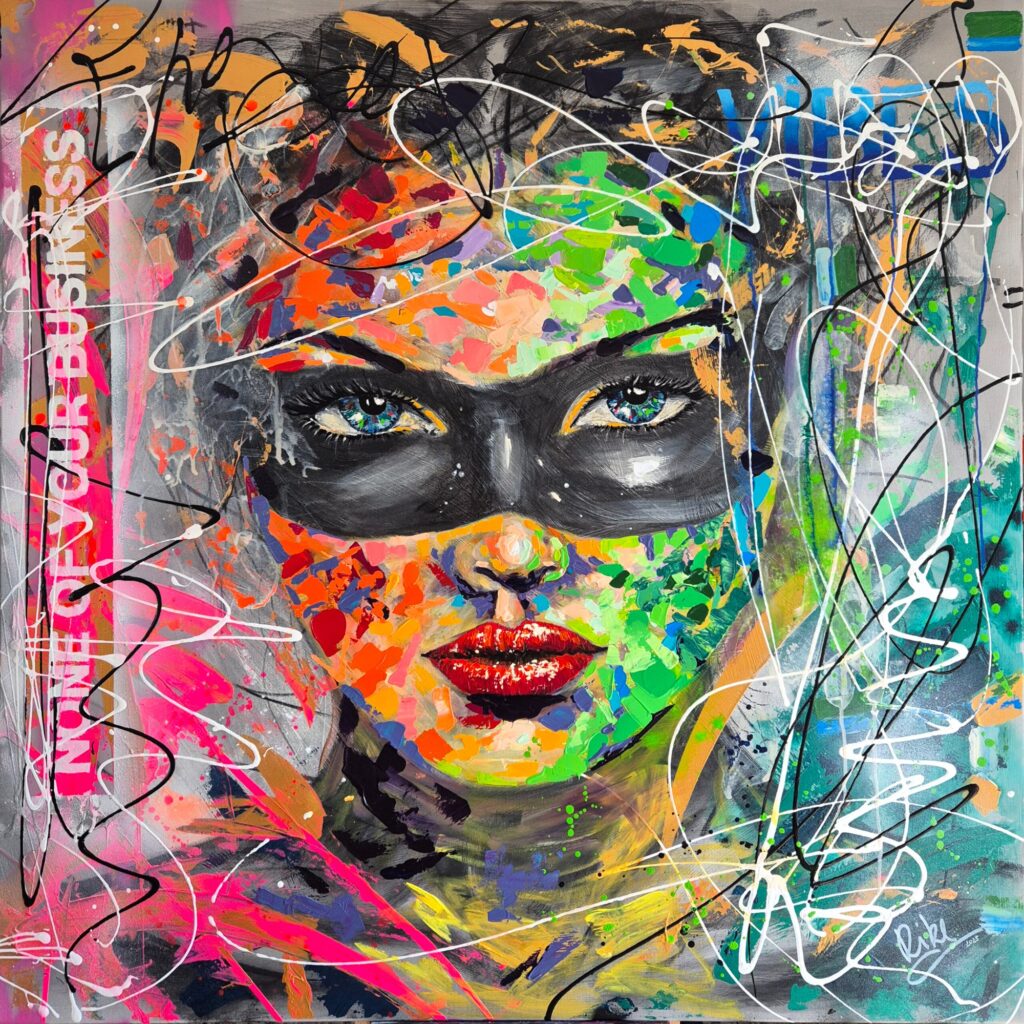
In Rike Wölke’s “None of your Business” (2025, mixed media on canvas, 130 × 130 cm), language enters the viewing directly. The lettering shares the picture with the face and sets a clear accent. How we experience the direct gaze, as self-assured, challenging, or watchful, nevertheless remains open.
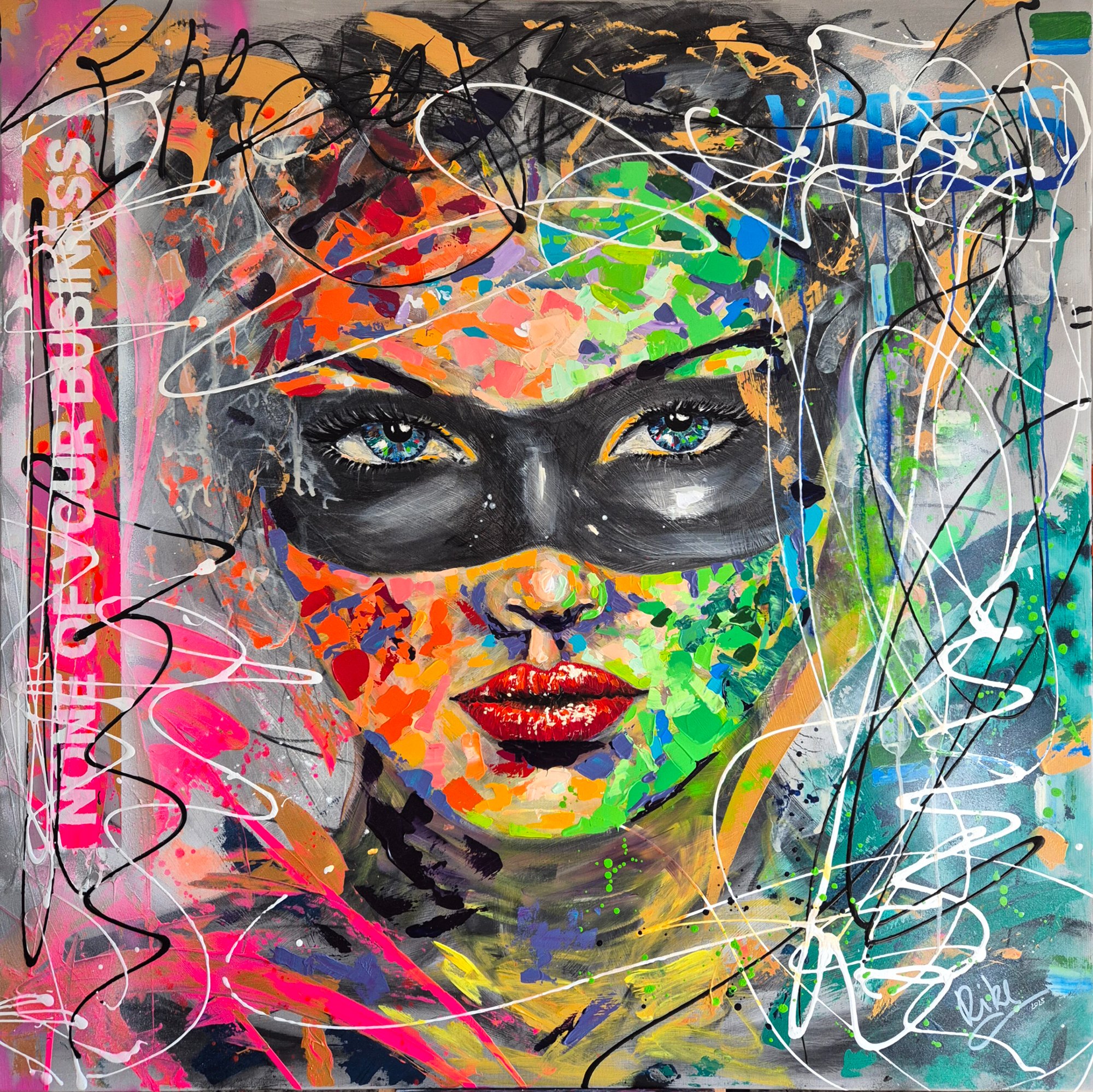
The words make the picture more accessible and are, at the same time, shaped by its design. The same sentence could have a different effect in another composition. In this way, even a work with a clear linguistic statement can open up several readings. You can read more about this work in our article The Portrait Between Closeness and Estrangement.
Context Deepens the Encounter
Information about a work can change how we see it. Knowing about a material, a group of works, or the circumstances of its making reveals decisions that had gone unnoticed. It is worth keeping three levels apart: documented details of the work, statements by the artists, and the viewers’ interpretation. All of them can contribute to the encounter; their origin should remain recognizable.
At Favori Art, we understand the texts on our artists and works as an invitation to look more closely. They offer reference points, make connections, and make particularities accessible. Our own experience in front of the work develops further in exchange with them.
Openness Needs Precision
Keeping a picture open demands attention. Any interpretation gains when it can refer to something visible or to a traceable connection. Anyone who perceives tension in a figure can ask about posture, lines, or spatial relationships. Anyone who feels calm can examine how areas of color, distances, and transitions work together.
Sometimes closer looking confirms the first impression, sometimes it changes it. This change is precisely what makes it fruitful: a reading may develop, become more precise, or give way to another.
Allowed to Return
A familiar picture can look different on another day. The light has changed, we stand closer, a line we had overlooked suddenly draws our attention. Our own experience has moved on as well.
This is especially true of works we live with. A picture that is not exhausted by an explanation can remain present in a room for years, because it shows something new with each encounter. For collectors, this is a quiet but lasting reason to decide on a work.
Perhaps it is a new question, perhaps a connection that becomes clearer. Perhaps the experience that a picture continues to occupy us, although we thought we knew it long ago.
Discover the artistic positions at Favori Art in the gallery. Our reflections on works and personal conversations offer reference points for your own approach, with time for questions and room for further discoveries.