You stand in front of a painting and notice the small label beside it with the title, technique, and price. Often your eyes go there first. The question of what the work means comes second: Is this price easy to understand?
That uncertainty is understandable. There is no fixed rate card for art, and yet prices follow a logic. If you know it, you can look at a work more calmly and make a decision that still feels right years later.
Why Prices Are Hard to Place
Unlike a piece of furniture, two paintings can rarely be compared directly. Even at a similar size, technique, date of creation, and artistic position can differ widely. On top of that, much of the information needed to place a work is not visible at first glance.
That does not mean prices are arbitrary. It means several factors work together, and you can look at each one separately.
What Goes into the Price
Most prices in contemporary art are built from the same components:
- Size and effort: A work measuring 145 × 160 cm (about 57 × 63 in) takes more material, more time, and more space in the studio than a piece of 60 × 80 cm (about 24 × 31 in). Size is only one clue, though, because dense, layered painting often takes more time than a large, quiet surface.
- Materials and technique: Oil, acrylic, mixed media, layers of resin, inclusions such as sand or earth: they affect how a work is made, how long it lasts, and how it looks.
- Unique work or edition: An original exists only once. With an edition, the size of the run and the quality of the execution shape the price. You can read more in our article Original vs. Edition – When Each Format Makes Sense.
- The artist’s track record: Exhibitions, awards, publications, and the consistency of an artist’s work show how a position has developed.
- Representation and support: Where a work is selected, presented, described, advised on, and safely delivered, that work is part of the price. Value-added tax and shipping costs belong here as well.
No single component explains the price on its own. What matters is how they work together.
Two Works, Two Pricing Logics
Two works from our gallery show how differently the weight can fall.
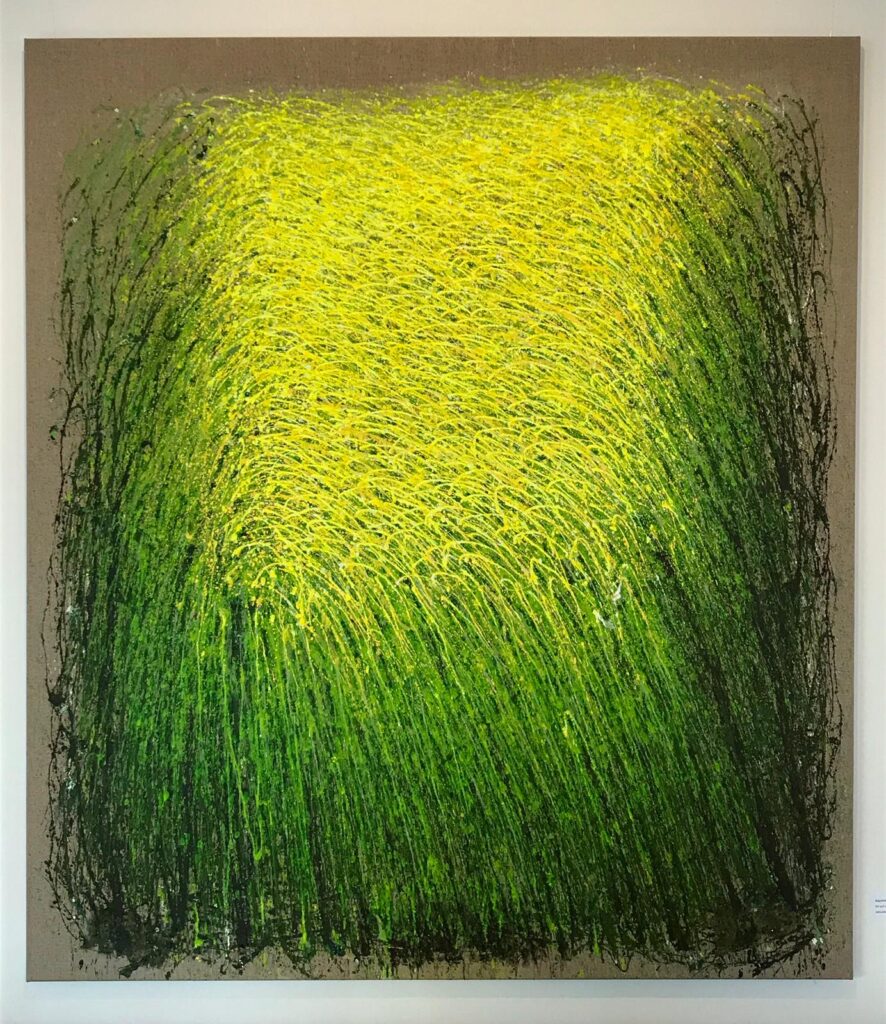
In “Rapsfeld” (Rapeseed Field) by Sadik Uslu (2023, acrylic and oil on raw canvas, inclusions of sand and earth, 145 × 160 cm / about 57 × 63 in), the large size plays an important role. The material quality of the surface and the density of the brushwork add to it. The effect comes from surface and structure.
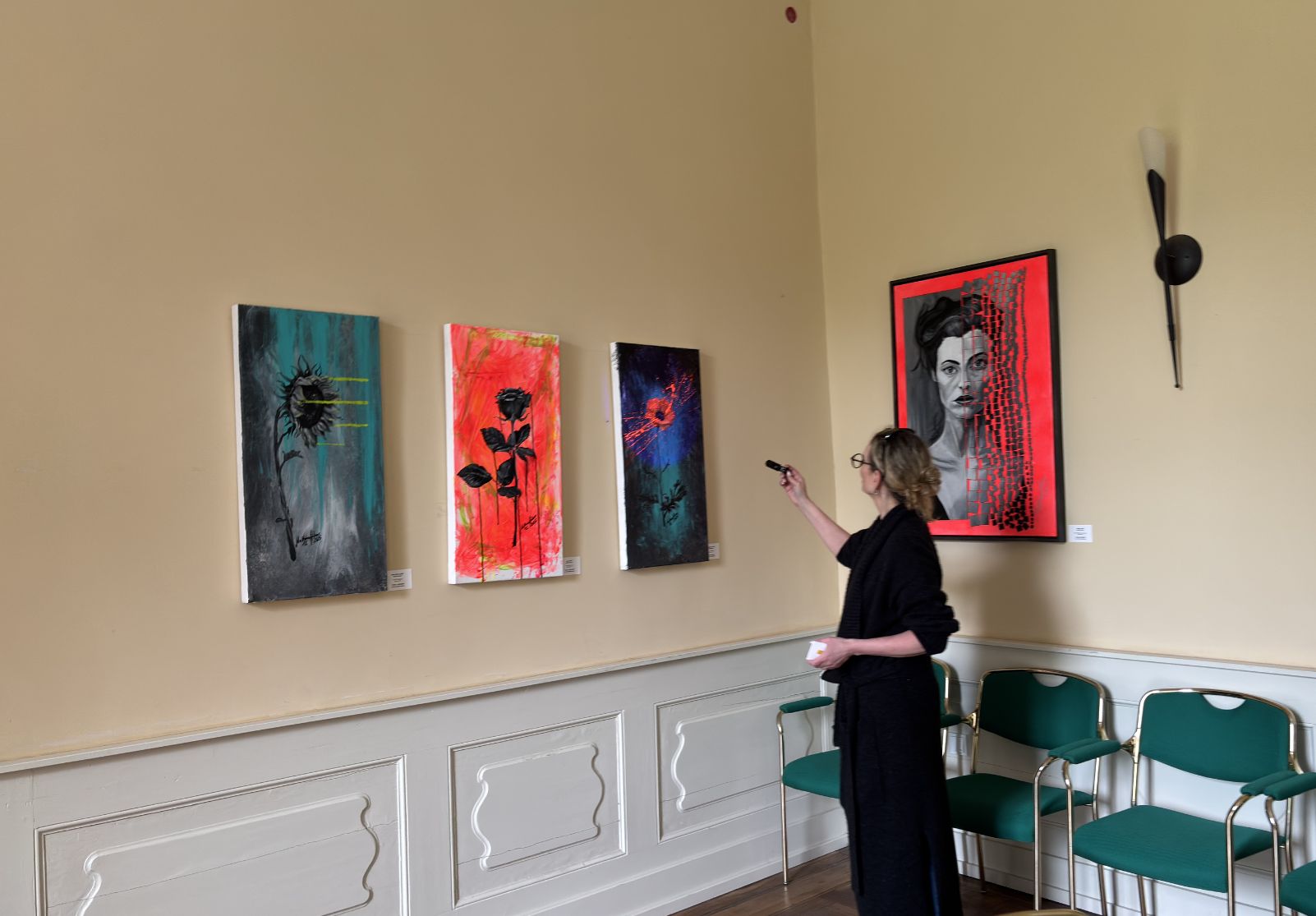
With Rike Wölke’s “Fühl nichts – Glaub nichts” (“Feel Nothing – Believe Nothing,” 2025, acrylic with partial epoxy resin on canvas, 85 × 60 × 4 cm / about 33 × 24 × 1.5 in), the size is smaller, but the making is distinctive. The resin adds gloss and depth only in selected places, and the surface changes with the light in the room. Here, technique does most of the work.

A larger painting is not automatically the more expensive one, and a smaller one is not automatically the less expensive. What matters is what goes into a work.
How to Recognize a Transparent Price
A price you can follow usually shows a few clear signs:
- The price is shown openly with the work, not only on request.
- The work details are complete: title, year, technique, dimensions, unique work or edition.
- A work passport and a hand-signed certificate document authenticity.
- Value-added tax and shipping costs are clearly stated before you order.
- You get a clear answer to questions about origin, the artist, or the edition size.
If several of these details are missing, it is worth asking. A reputable seller is glad to answer.
Price and Value Are Not the Same Thing
A price tells you what a work costs today. What it means to you in daily life only shows over time: whether it keeps drawing you back, whether it holds its own in a room, whether it grows older with you. Both belong in the decision, but only the second cannot be put into numbers.
If you are buying art for the first time, our article Your First Art Purchase – A Guide to Collecting Contemporary Art offers orientation on budget and approach.
Questions You Are Welcome to Ask
It is perfectly normal to ask before you buy, and it shows care:
- How did the work come about, and is it part of a series?
- Are there documents on authenticity and origin?
- How is the work delivered, and what is included in the price?
- Can you get a sense of the work in your space beforehand, for example through dimensions and a hanging recommendation?
At Favori Art, we are glad to answer these questions, in personal conversation and in the description of every work.
Conclusion
An art price is not a riddle, but it is not a formula either. It brings together effort, materials, track record, and representation into an assessment you can follow. If you know these components, you can compare prices better and feel more confident in your decision.
Explore the artistic positions in our gallery. To learn how we document authenticity and provenance, see Collect with Confidence.
If you have questions about a work, we are happy to advise you personally.