
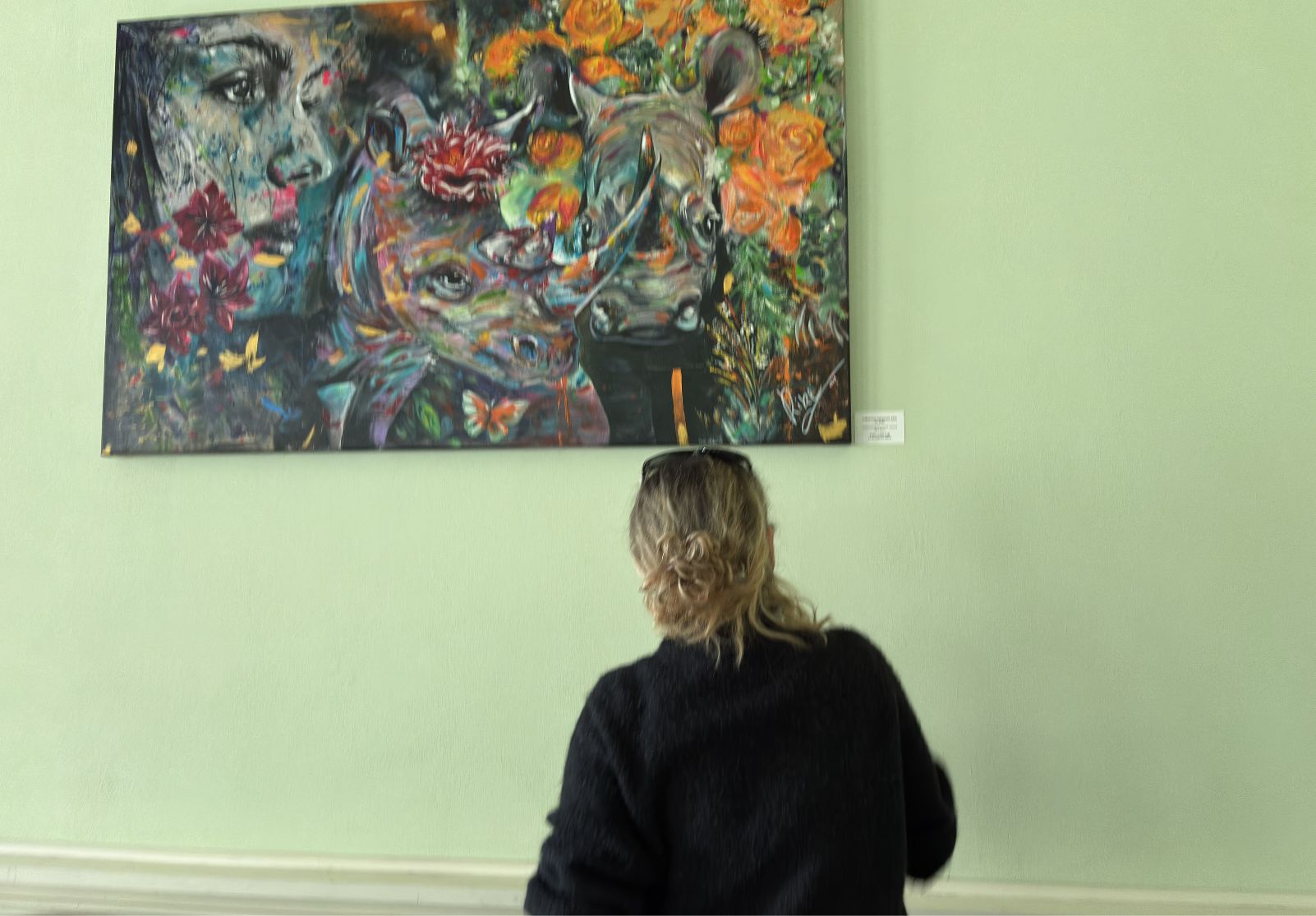
An original changes how a space feels and how people move within it. That holds true in a living room as much as in a law firm, a medical practice or a hotel. It takes no art-historical background, only curiosity, a little time to look, and four considerations about how a work and its surroundings interact.
Look at the space first
Who spends time here? From what distance will the work be seen? Will people walk past it or sit facing it? In a reception area, a work is usually seen only for a moment. In a conference room or above a sofa, there is time for detail. In a hallway, a painting can draw attention from the far end of the space. These differences give you the first clues for your selection.
Think about size and viewing distance together
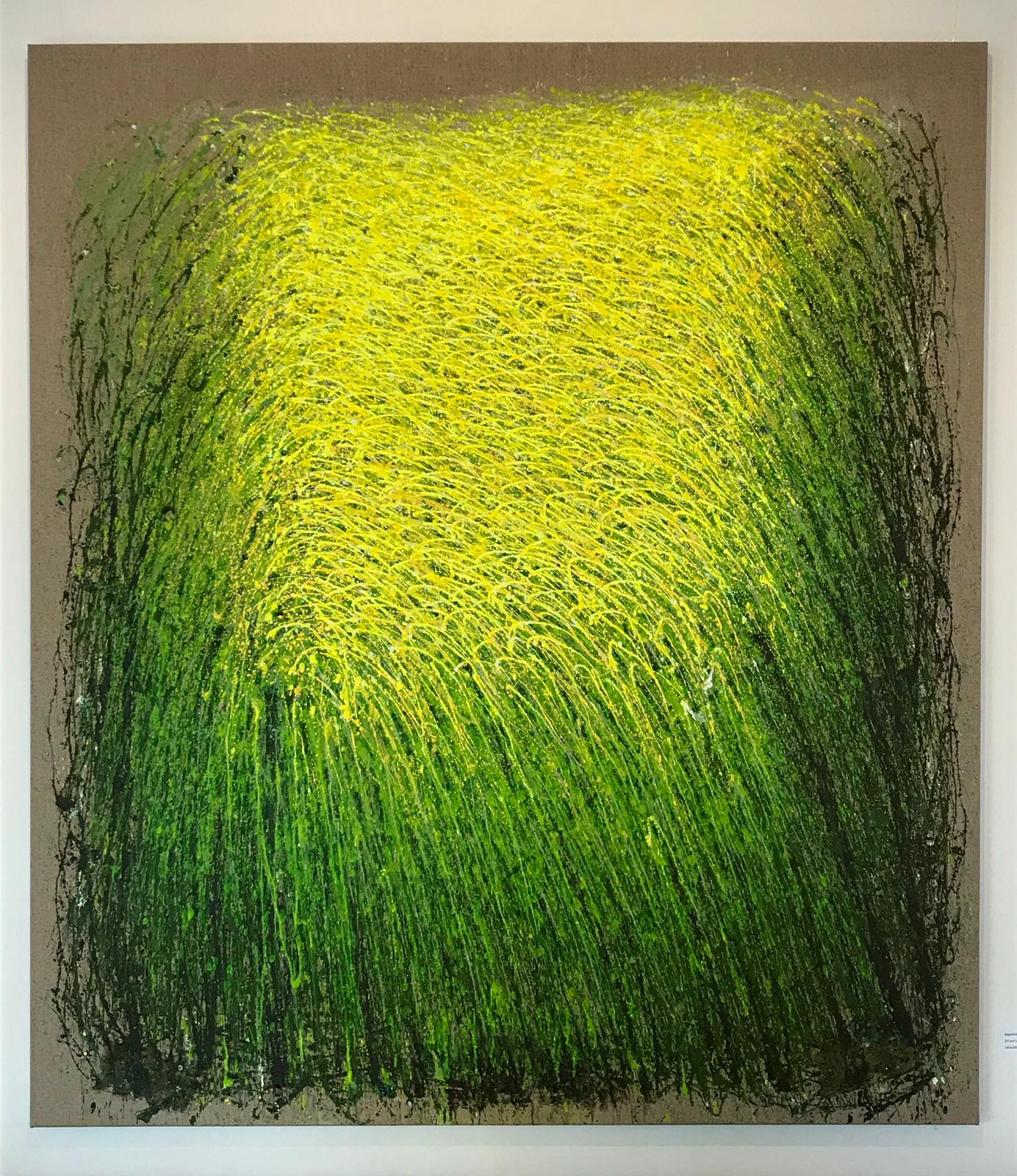
Sadik Uslu’s “Rapsfeld” (Rapeseed Field) from 2023 measures 145 × 160 cm (about 57 × 63 in). From a distance, luminous yellows and greens set the impression; as you move closer, the layers of paint and the embedded sand and earth come forward. A work like this holds a large wall and rewards those who step closer.
Smaller works are strongest where you can get close to them. Several together can fill a wall just as well. Whether they read as a group depends on the spacing and on how the motifs relate to each other.
A simple tip: mark the intended area on the wall with painter’s tape. Lay smaller works out on the floor first, in different arrangements.
Light is part of the work
At its intended spot, a work often looks different from how it looks on a screen. Light from the side brings out relief and fine texture, a focused beam highlights individual areas, and even lighting makes the whole surface easier to take in. Reflections also change how well a painting can be seen.
So look at the spot in the morning, in the afternoon and with the room lights on. More on this in our piece on the return of the tactile.
A painting doesn’t have to please everyone
In shared spaces, the wish for a picture that bothers no one arises quickly. Often that becomes a picture no one looks at for long. A work is allowed to take a stance.
Erich Graf’s “Lion modern” looks straight at the viewer. The mane opens into green, blue, pink and yellow, while the eyes remain clearly drawn. The painting feels calm and watchful at once, from a distance as well as up close.

Whether such a work suits your space shows in your own reaction: would you want to meet this gaze every day? It doesn’t have to reveal itself right away. Sometimes the connection grows through repeated looking.
Buy, or rent first
If you would like to get to know a work in everyday life first, you can rent art at Favori Art. Together with you, we put together a selection and agree on delivery, hanging and rental term in advance. After the rental period you can exchange works or purchase one by arrangement. For companies, law firms, practices and hotels, we also develop art concepts for several rooms or locations, tailored to architecture, brand and the people who spend time there.
If you prefer to buy directly, the Gallery offers originals with detailed work information and a curatorial reflection. Every original comes with a hand-signed certificate of authenticity.
Would you like to choose art for your spaces? We advise you personally and accompany you from the first selection to the right placement.