In times of volatile markets and digital short-lived trends, there is a growing longing for values that do not depend on the next update. Art is not a “quick product” – and that is exactly its strength. It combines physical substance with cultural relevance and a kind of return you will never see on a bank statement.
At Favori Art, we do not see art as decoration. We see it as a building block of value: for spaces, for collections – and for long-term decisions.
Why Art Works Differently from Traditional Assets
Art does not follow the logic of daily prices. It follows the logic of demand, scarcity, quality and context.
What makes art interesting as an asset:
-
Tangible value & presence: a work is physical, lasting and cannot be reproduced at will.
-
Scarcity: one-of-a-kind works are rare by definition. Limited editions create controlled availability.
-
Cultural significance: visibility, exhibitions, collector interest and narrative shape how value is perceived over time.
-
Emotional return: a work pays out “every day” – through atmosphere, focus and identity in a space.
The Difference Between Hype and Substance
A smart art investment does not begin with a trend but with an artistic signature. We look for positions that already have a clear artistic language – and whose market potential can be derived from real criteria, not from noise.
How we assess market potential
-
Consistency across bodies of work: a recognizable visual language and a clear line of development.
-
Edition policy & scarcity: originals and editions, edition sizes, price tiers, availability.
-
Documentation & provenance: signature, work details, certificate of authenticity, a traceable history.
-
Resonance in the market: collector interest, how easily works can be placed, thematic relevance, ability to hold their own in different contexts.
-
Presence in a space: a work has to carry a room – in a private interior as much as in a corporate space.
Tomorrow’s “Blue Chips”: Positions with Profile
Art with an investment logic is rarely the loudest. Often it is the most precise.
Example: Jülide Özarici
Her work occupies a clear niche: automotive aesthetics as a cultural symbol between design, luxury codes and iconic form. This appeals to design-minded collectors – and works just as powerfully in showrooms, offices and contemporary interiors where art is meant to make a statement.
Example: Erich Graf
Mastery is once again a market argument. In a world where images can be generated en masse, craftsmanship carries new weight: painting that radiates precision, calm and technical depth – and so delivers exactly the kind of permanence many collectors are looking for today.
Scarcity: the quiet stabilizing factor
The development of value almost always has to do with supply.
-
Originals cannot be scaled – which naturally keeps availability limited.
-
Editions are strong when limitation, quality and documentation are handled properly.
-
A consistent pricing logic matters more than quick jumps: collectors trust stability, not chaos.
Reality, Not Myth: Time Horizon & Liquidity
Art is not a short-term trade. Prices can fluctuate – and resale depends on timing, condition, demand and context. If you think of art as an asset, think in years, not weeks.
The upside: good works rarely lose relevance. They often gain history.
A Strategy for Newcomers and Connoisseurs
A proven approach is hybrid:
-
Stability: established positions with clear market resonance.
-
Growth: promising artists with a strong signature and a coherent body of work.
For newcomers: do not buy “something with a return.” Buy the work you would keep even if you never sold it.
Collector Services at Favori Art
So that a purchase is sound not only emotionally but also structurally, we take care of:
-
Professional art packaging & insured shipping
-
Work documentation: title, technique, format, year, signature
-
Certificate of authenticity as the basis for provenance and long-term value
-
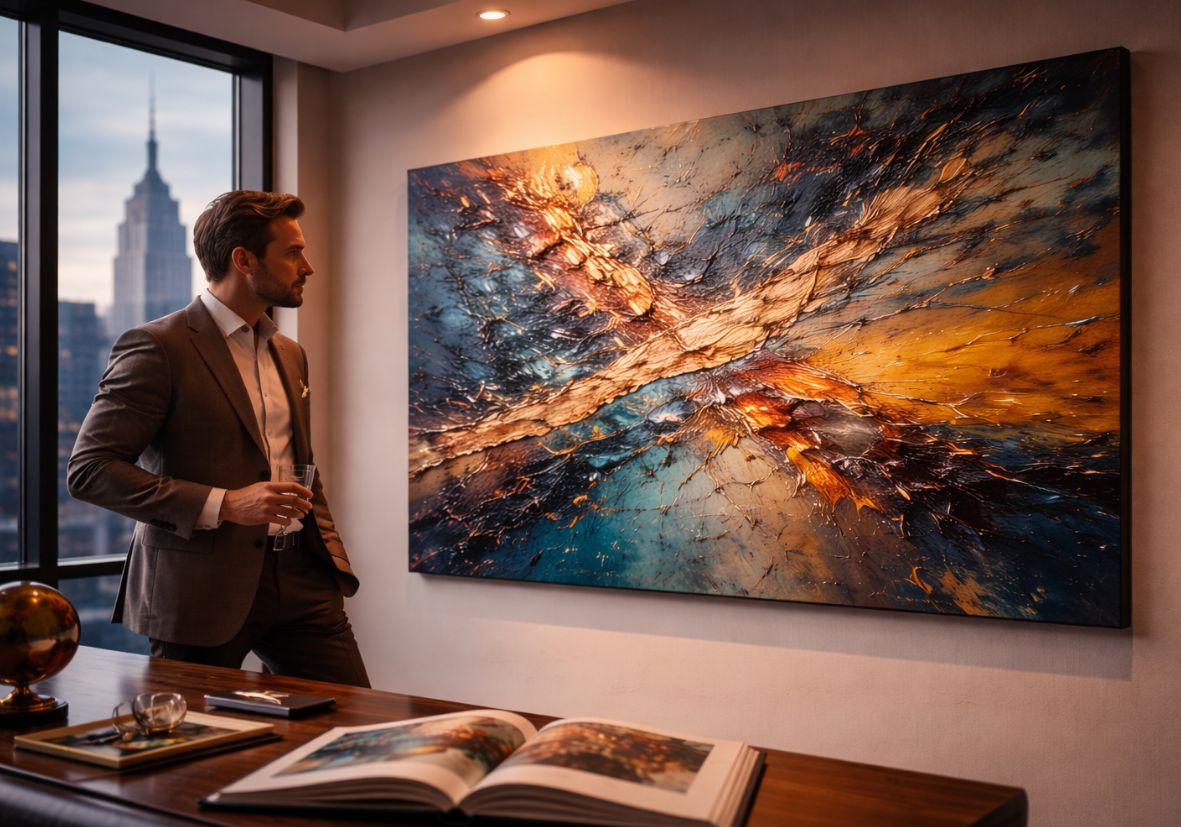
Personal advice (placement, combinations, hanging & lighting)
-
On request, a visualization in your space to support your decision
Conclusion: Art Is the Asset That Collects History
Art can be part of smart diversification – not because it is always “safe,” but because it is different: rare, physical, culturally charged. And because it does something no other asset can: it changes a space – and with it, everyday life.
Looking to broaden your portfolio? Discover hand-picked works in our Art Store – curated for substance, not hype.