Art in the workplace is not a pleasant extra but a clear statement: it creates identity, strengthens atmosphere, invites conversation and gives spaces direction.
This article shows how professional curation turns workplaces into distinctive spaces of experience – with conviction, precision and a long-term view.
Art as a stance – not as decoration
It starts not with the picture but with the idea: what does this company stand for?
Precision or warmth, pioneering spirit or permanence, urban energy or contemplative calm? Only once these guardrails are tangible do we translate them into a visual vocabulary: materiality, color climate, composition, format, surfaces. A tech company might present itself with clean lines, cool nuances and metallic reliefs; a law firm with muted tones, precise drawing and calm formats. This way, art becomes the visible language of a brand – not interchangeable decoration.
Reading Spaces – Letting Zones Speak
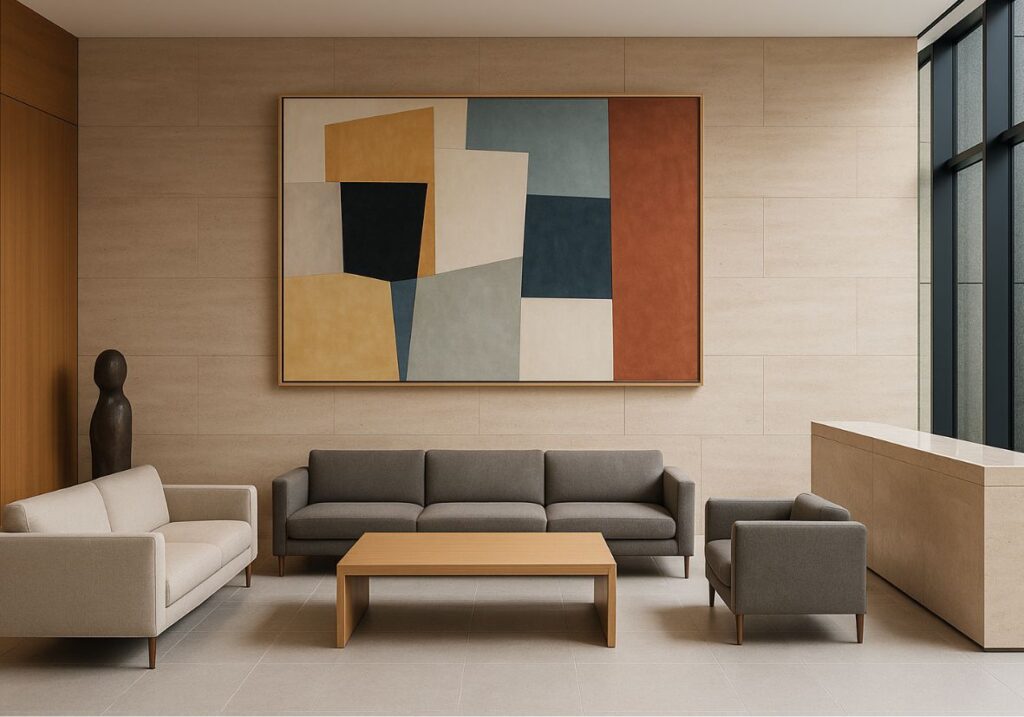
Good curation does not fill walls; it assigns roles. The lobby is both welcome and promise. It needs a gesture that carries across a distance – a sculptural work or a standalone piece that communicates confidence, scale and character.
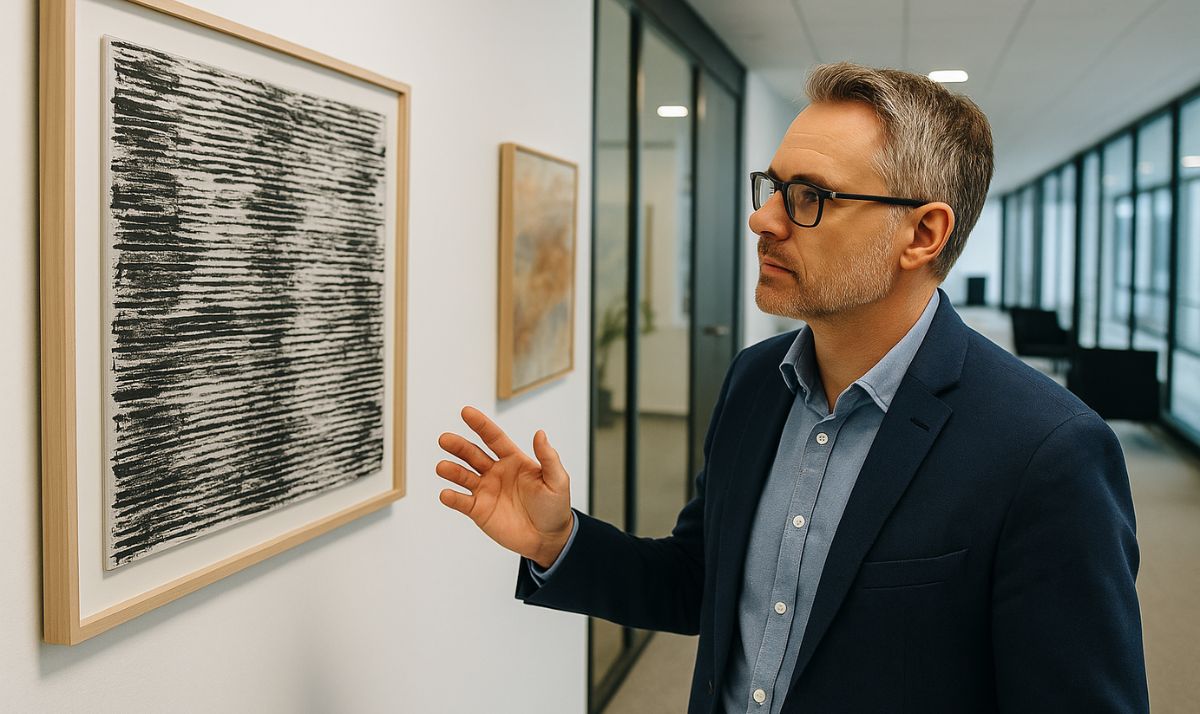
In waiting areas, works can become more subtle: details that hold the gaze without overwhelming, surfaces that invite a closer look. Corridors gain character through rhythm: series, sequences and wall sculptures support wayfinding and make orientation intuitive. Meeting rooms benefit from clearly composed, glare-free motifs that focus thinking and open up conversation. And in focus zones: fewer stimuli, more calm – matte surfaces, subdued brightness, deliberate restraint.
Light Determines Presence
A work lives from the right light. Accent lighting lifts art out of the general brightness without glare; color fidelity ensures that pigments, textures and depth appear as intended. With reliefs and sculptures, side light shapes the three-dimensionality – shadow becomes a second drawing. In representative zones, the ratio of accent to ambient light can be pronounced; in work areas, light stays calmer and more even. Curation and lighting design belong together: only when they are coordinated does the desired presence emerge.
Composition Beats Quantity
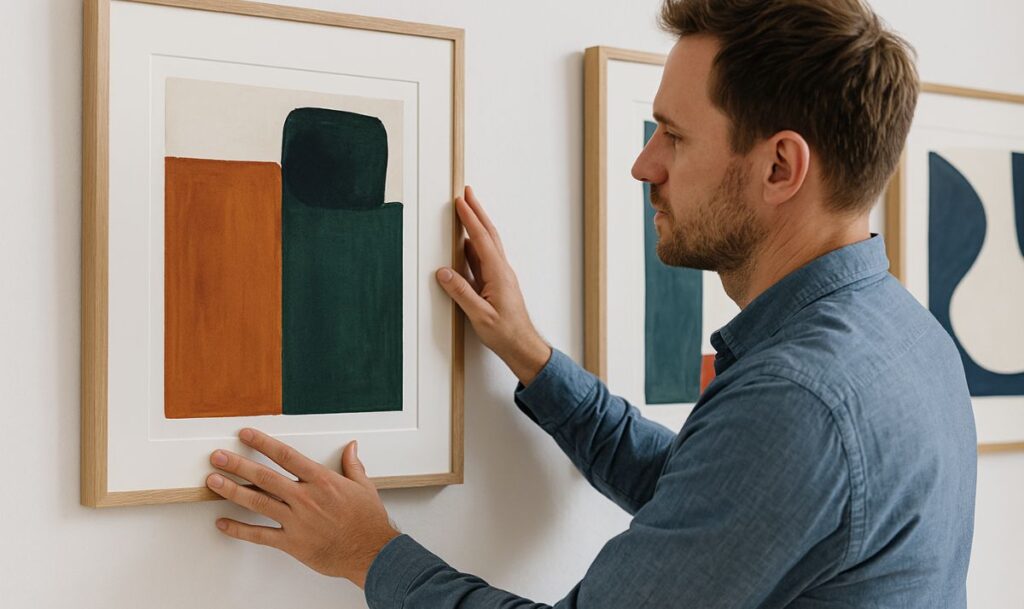
Impact is a question of hierarchy. A single, confidently placed work in the reception area speaks more clearly than five medium-sized pictures competing for attention. Series work when they share an order – a common top line, consistent spacing, a deliberate grid. Sculptures need room to breathe; only space around them gives their contour its strength. Contrasts – large/small, matte/glossy, calm/energetic – are set deliberately. A space should not be “average,” but decisive.
Thinking Material and Everyday Use Together
Office spaces are used – daily, intensively, with changing demands. That is why durability is part of the aesthetic. Sturdy supports, sealed surfaces and concealed, secured hanging systems preserve the look for years. Professionalism also includes documentation: certificates of authenticity, edition details, installation photos, care and handling instructions. This gives facility teams and insurers confidence – and preserves the value of the collection.
Safety, Installation, Responsibility
Curation does not end with the mood board. It includes wall substrates, load paths, safety fixings and – in publicly accessible areas – protection against vandalism and falling objects. Professional installation is invisible yet decisive: it holds what it promises.
Clear responsibility in day-to-day operations is just as important: who is the point of contact? How are care intervals organized? What time windows are available for hanging or exchanging works? When technology and responsibilities are in place, art holds its own in everyday life.
Making the Impact Visible
Art changes the atmosphere – and that can be shown. Before-and-after photos of the same sightlines make the difference strikingly clear. Short feedback from reception, HR and teams reflects the impact in everyday life: the quality of welcome, conversation starters, orientation, identification. Those who have defined goals recognize progress faster – and can make a solid case for budgets to develop the collection further. This turns a beautiful measure into a strategic building block of the working world.
How We Curate at Favori Art
We translate values into spaces: from the first sketch and the selection of standalone pieces, series and wall sculptures to lighting, installation, documentation and care. Our aim is precise, long-term design that develops with the company – location by location, zone by zone.
If you would like to see what this approach looks like, explore our online gallery: painting, works on paper, sculptures and reliefs, and selected editions. Every work is curated, every motif tells a clear story – for private spaces, public areas and businesses.
Note: you can find our online gallery and current works directly at Favori Art. We are glad to put together a selection that fits your brand identity and your spaces – or learn more about renting art for your business.